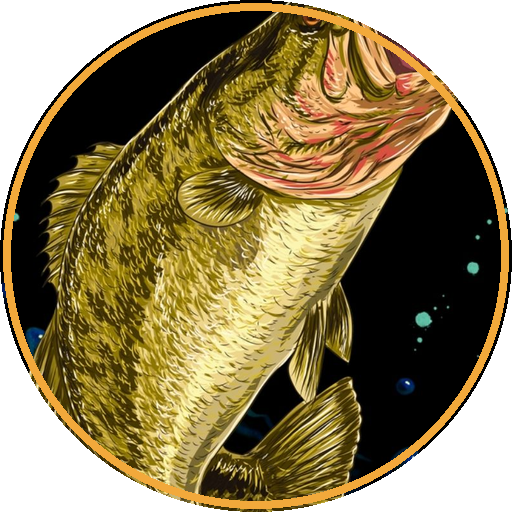
Beginner's guide
How to Catch Bass
Bass are the most popular game fish in North America because they live almost everywhere, hit hard, and fight well. Here's what you need to know to start catching them.
Know your bass
Largemouth
The jaw extends past the eye. Likes weeds, wood, docks and warmer, slower water. The most common bass in ponds and lakes.
Smallmouth
Bronze color, jaw ends under the eye. Prefers rocks, gravel and cooler, clearer water in rivers and northern lakes.
Spotted bass
Looks like a largemouth, with rows of spots below the stripe and a tooth patch on the tongue. Common in Southern reservoirs.
Where bass hide
Bass are ambush hunters. They wait next to something that hides them, then dart out to grab food. Fish the "something."
Cover
- Weed beds and lily pads
- Fallen trees (laydowns)
- Docks and boat lifts
- Brush piles and stumps
Structure
- Points sticking out into the lake
- Drop-offs where shallow meets deep
- Rock piles and riprap banks
- Creek channels
Shade & edges
- Shady side of docks on sunny days
- Where weeds end and open water starts
- Where a creek flows into the lake
Best times to fish
- Dawn and dusk: low light makes bass feel safe to roam and feed shallow.
- Cloudy or windy days: overcast skies and a little chop make bass bolder all day long.
- Before a cold front: fish often feed heavily as the weather starts to change.
- Hot summer days: go early, go late, or fish deeper and in the shade at midday.
Step by step: your first fish
- Get your license. Almost every state requires a fishing license for adults. Check your state wildlife agency's website, and check the local size limits and seasons too.
- Start simple. A medium-power spinning combo with 8–10 lb line and a 5-inch stick bait on a wacky rig catches bass anywhere.
- Cast past the target. Land the bait beyond the cover and bring it right next to it.
- Watch your line. Many bites feel like nothing. If the line twitches, jumps or swims sideways, a fish has it.
- Set the hook. Reel up the slack, then sweep the rod up firmly. With soft plastics, set it hard. With treble-hook lures like crankbaits, just keep reeling and lean into the fish.
- Keep the rod up and steady. Let the drag do the work. Don't yank, and don't give slack.
- Land it. Grab a bass by the lower lip with your thumb, and support its belly if it's big.
Catch and release the right way: wet your hands before touching the fish, keep it out of the water as little as possible, hold big fish horizontally, and use pliers to get the hook out fast. Let it swim away on its own.
Reading the water
- Clear water: use natural colors (green pumpkin, shad, watermelon), lighter line, and longer casts.
- Stained or muddy water: use darker or brighter colors (black/blue, chartreuse) and lures that thump or flash.
- Bait fish jumping: bass are feeding. Throw something that looks like a shad, such as a lipless crankbait or swimbait.